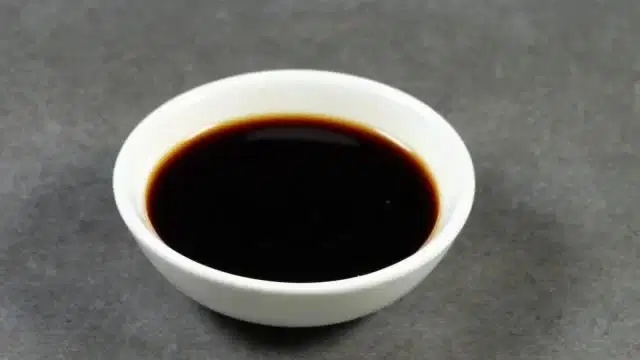
Soya Lecithin

  • Origin: India, Argentina, China, Brazil
  • CAS Number: 8002-43-5
  • HS Code: 2923.20.10
IUPAC Name
[(2R)-3-hexadecanoyloxy-2-[(9E,12E)-octadeca-9,12-dienoyl]oxypropyl] 2-(trimethylazaniumyl)ethyl phosphate
Molecular Formula
C42H80NO8P
Synonyms & Trade Names
1,2-DIMYRISTOYL-RAC-GLYCERO-3-PHOSPHOCHOLINE; 8002-43-5; DIMYRISTOYLPHOSPHATIDYLCHOLINE, DL-; DL-dimyristoylphosphatidylcholine; DMPC; MFCD00066562; Dimyristoyl phosphatidylcholine; DTXSID4046816; 2,3-di(tetradecanoyloxy)propyl 2-(trimethylazaniumyl)ethyl phosphate; EINECS 242-481-1; DL-,-Dimyristoyl--lecithin; dimyristoyl-phosphatidylcholine; SCHEMBL244839; U86ZGC74V5; DTXCID2026816; C42H80NO8P; DL-beta,gamma-Dimyristoyl-alpha-lecithin; NCGC00181029-01; 1,2-DIMYRISTOYL-PHOSPHATIDYLCHOLINE; CS-0204636
Appearance / Color
Dark Brown
Moisture Content (%)
Max. 1%
Drug Precursor Status
Non-precursor

Technical Document

About Soya Lecithin Soy lecithin is a type of phospholipid that is extracted from soybeans. It is commonly used as an emulsifier in food production, helping to stabilize mixtures that would otherwise separate, such as oil and water. Soy lecithin is also used as an ingredient in many processed foods, cosmetics, and industrial processes. Manufacturing Process The manufacturing process for soy lecithin involves cleaning and conditioning soybeans, mechanically dehulling them, and then extracting the oil using a solvent. The resulting crude soybean oil is then degummed to remove impurities such as phospholipids, dried, and mixed with a solvent to extract the phospholipids. The extract is then filtered, and the solvent is evaporated to leave behind a concentrated soy lecithin extract, which may be further processed to remove excess oil.