Introduction
Protein quality remains one of the most decisive factors in modern animal feed formulation. As feed producers face rising raw material costs and increasing demand for efficient animal growth, ingredients that deliver consistent protein content and a reliable amino acid profile are becoming indispensable. Poultry meal has emerged as one of the most trusted animal protein sources, valued for its high crude protein level, favorable amino acid balance, and strong digestibility across multiple species.
In poultry, livestock, aquaculture, and pet food nutrition, poultry meal supports muscle development, metabolic efficiency, and immune function. Its predictable nutritional performance allows formulators to design cost-efficient diets without compromising growth or feed conversion. This article explores the protein content, amino acid composition, digestibility, and practical advantages of poultry meal.
What Is Poultry Meal?
Poultry meal is a rendered animal protein ingredient produced from poultry carcasses that originate from birds processed for human consumption. The rendering process involves controlled cooking, moisture removal, and grinding to create a stable powder or granular product suitable for long-term storage and transport.
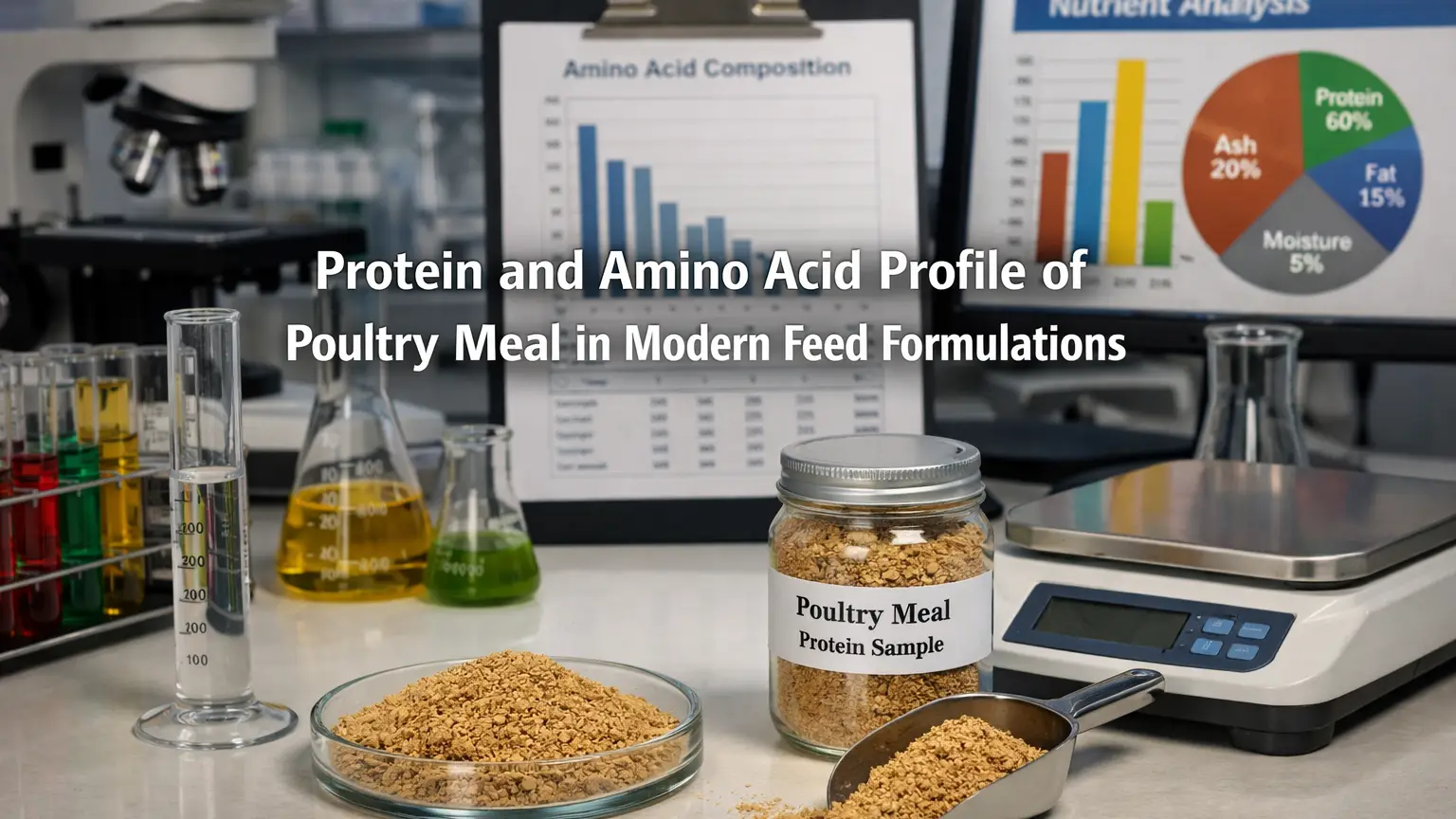
High-quality poultry meal typically contains between 63 and 71 percent crude protein, along with moderate fat levels and controlled ash content. Compared with poultry by-product meal, poultry meal is generally more consistent in composition because it relies on higher-grade raw materials and tighter process control. This consistency makes it easier for nutritionists to predict performance and adjust formulations with precision.
Importance of Protein and Amino Acids in Feed Nutrition
Animals rely on amino acids rather than crude protein itself. These amino acids support growth, tissue repair, enzyme activity, hormone production, and immune defense. Essential amino acids such as lysine, methionine, threonine, tryptophan, arginine, and histidine cannot be synthesized in sufficient quantities by monogastric animals and must be supplied through feed.
In cereal-based diets, lysine and methionine are often limiting. When one essential amino acid is deficient, overall protein utilization declines, leading to poorer feed efficiency and higher nitrogen excretion. Poultry meal addresses this challenge by supplying a naturally balanced amino acid profile that complements plant-based ingredients and supports digestible amino acid formulation strategies.
Protein Content of Poultry Meal
The crude protein content of poultry meal generally averages around 65 percent, with variations linked to raw material quality and processing conditions. Poultry meal derived from fresh carcasses tends to show higher protein consistency and lower ash levels.
From a comparative standpoint, poultry meal competes strongly with other animal protein sources. Its protein content exceeds that of meat and bone meal and approaches that of high-grade fish meal. This makes poultry meal a practical option for reducing reliance on marine proteins, especially in regions affected by volatile fish meal pricing or supply constraints.
Amino Acid Profile of Poultry Meal
One of the key strengths of poultry meal lies in its amino acid composition. It provides substantial levels of essential amino acids required for efficient growth and production.
Typical poultry meal contains approximately 3.8 to 4.0 percent lysine, supporting muscle development and feed efficiency. Methionine levels average around 1.2 to 1.3 percent, contributing to feather development, antioxidant activity, and overall protein synthesis. Threonine supports gut health and immune response, while arginine plays a role in vascular function and immune regulation.
In addition to essential amino acids, poultry meal supplies branched-chain amino acids such as leucine and isoleucine, which are important for muscle protein synthesis and energy metabolism. This balanced profile reduces dependence on synthetic amino acid supplementation and improves formulation flexibility.
Digestibility and Nutrient Availability
Digestibility is a critical factor in determining the real nutritional value of any protein source. Poultry meal is known for its high protein digestibility, which commonly averages around 88 percent when properly processed. Amino acid availability typically exceeds 80 percent, allowing animals to efficiently utilize the nutrients provided.
Rendering conditions directly influence digestibility. Excessive heat can reduce the availability of sensitive amino acids such as lysine through heat-related reactions. Well-managed processing preserves amino acid integrity, improves feed conversion ratios, and reduces nitrogen waste, which also supports environmental sustainability goals.
Performance Benefits in Feed Applications
The inclusion of poultry meal in feed formulations supports a wide range of performance outcomes. In poultry diets, it contributes to rapid growth, strong muscle development, and improved feed efficiency. In swine and aquaculture feeds, poultry meal enhances protein density and palatability, supporting consistent intake and growth.
Balanced amino acid supply also strengthens immune response and gut function, which is increasingly important as producers reduce reliance on antibiotic growth promoters. From an economic perspective, poultry meal allows formulators to meet amino acid requirements without excessive crude protein inclusion, lowering feed costs and reducing nutrient excretion.
Quality Factors That Influence Nutritional Value
Not all poultry meal products deliver the same nutritional performance. Raw material freshness, rendering temperature, and processing duration all influence protein quality and amino acid availability. Proper fat stabilization is also important, as oxidation can negatively affect palatability and shelf life.
High-quality poultry meal is characterized by stable fat quality, controlled ash levels, and consistent protein content. For feed manufacturers, working with suppliers that provide detailed specifications and certificates of analysis is essential to maintaining formulation accuracy.
Global Sourcing and Supply Reliability
Poultry meal production is concentrated in regions with large poultry processing industries, including North America, Brazil, parts of Europe, and Asia. However, quality standards and regulatory compliance can vary significantly between suppliers.
Sourcing through established platforms such as Chemtradeasia simplifies this process. Chemtradeasia connects feed producers with vetted global suppliers, supports access to technical documentation, and ensures alignment with international feed safety standards. This reliability allows nutritionists to focus on performance optimization rather than supply uncertainty.
Conclusion
Poultry meal offers a dependable combination of high protein content, balanced amino acid composition, and strong digestibility, making it a cornerstone ingredient in modern feed formulations. Its ability to complement plant proteins, reduce formulation costs, and support animal performance positions it as a practical alternative to more volatile protein sources.
For feed manufacturers and nutritionists seeking consistent quality and global sourcing efficiency, partnering with trusted platforms such as Chemtradeasia provides access to reliable poultry meal supplies and technical support. By choosing the right supplier and maintaining quality-focused procurement, poultry meal can continue to deliver nutritional, economic, and sustainability benefits across the feed industry.
Leave a Comment