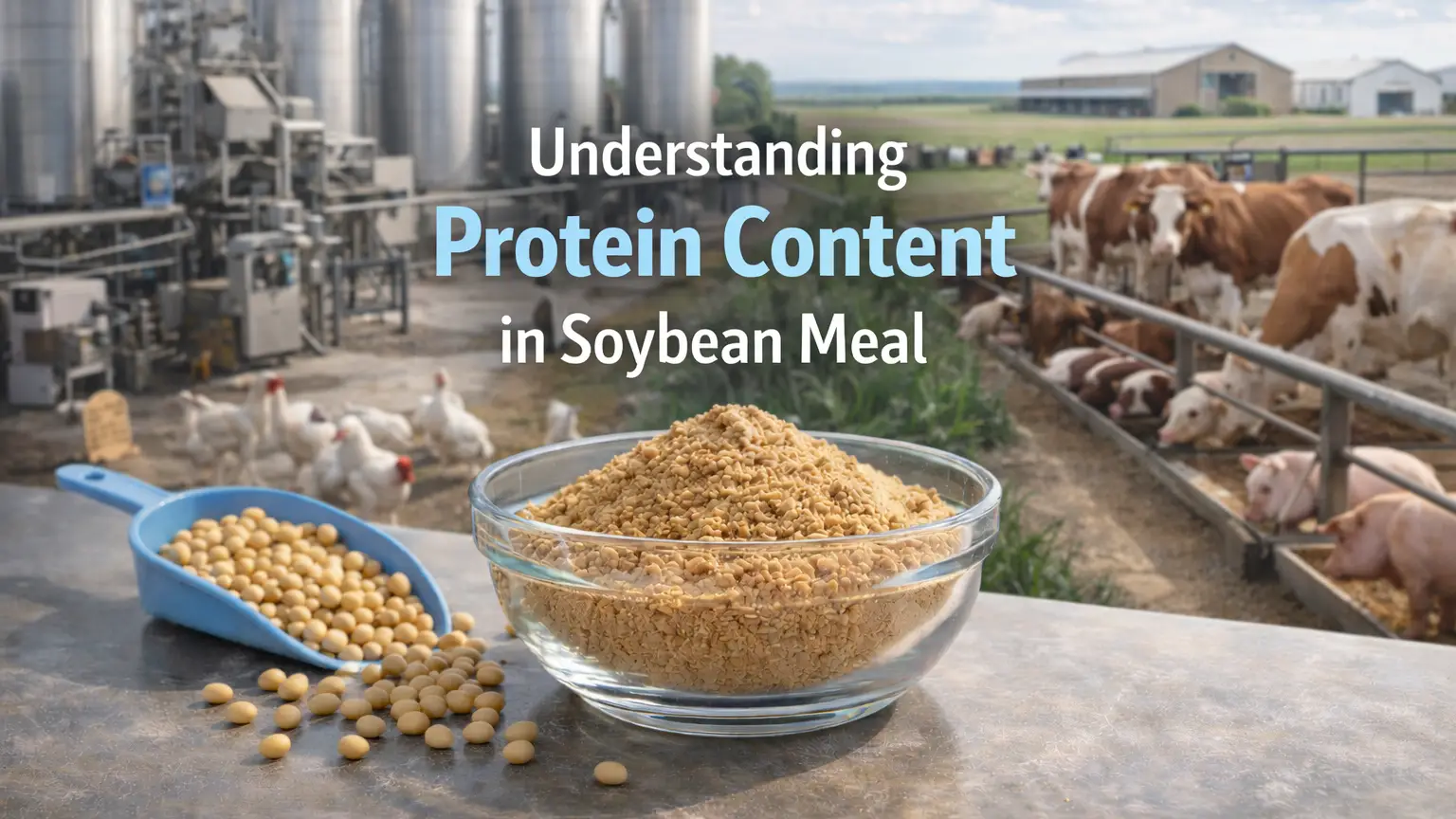
Protein content in soybean meal is one of the most critical factors influencing animal feed performance, formulation efficiency, and procurement decisions. As the world’s most widely used plant-based protein source, soybean meal plays a central role in poultry, swine, ruminant, and aquaculture nutrition. For nutritionists, feed millers, and sourcing professionals, understanding how protein content varies and what it means for feed quality is essential for optimizing both cost and animal performance.
This article explains how protein content in soybean meal is measured, what influences its levels, how it impacts feed formulation, and how buyers can select the right grade for different livestock applications.
Soybean Meal as a Primary Protein Source in Animal Feed
Soybean meal is produced as a byproduct of soybean oil extraction through solvent or mechanical processing. Once oil is removed, the remaining solid material is processed into meal, which is rich in protein and digestible amino acids. Due to its nutritional balance and global availability, soybean meal has become the benchmark protein ingredient in animal feed worldwide.
In commercial feed formulations, soybean meal often accounts for 20 to 35 percent of total diet composition in poultry and swine rations. Its consistent supply, favorable amino acid profile, and compatibility with other feed ingredients make it indispensable across intensive livestock systems.
What Protein Content in Soybean Meal Means
Protein content in soybean meal refers to crude protein, which is calculated by measuring nitrogen content and multiplying it by a factor of 6.25. This method estimates total protein, including both true protein and minor non-protein nitrogen components.
Industry-standard testing methods include the Kjeldahl method, which relies on acid digestion and titration, and the Dumas combustion method, which uses high-temperature oxidation for rapid nitrogen analysis. Both methods are widely accepted for trade, quality control, and regulatory compliance, ensuring consistency in reported soybean meal protein percentages.
Typical Protein Ranges in Commercial Soybean Meal
Commercial soybean meal is commonly available in protein ranges between 44 percent and 48 percent on a dry matter basis. These grades serve different nutritional and economic purposes.
Soybean meal with 44 percent crude protein is typically non-dehulled and contains higher fiber levels. This grade is widely used in ruminant diets, where fiber digestion is efficient and cost sensitivity is higher.
The 48 percent crude protein grade is usually dehulled, resulting in lower fiber and higher nutrient density. This grade is preferred in poultry and swine feeds, where amino acid precision and feed efficiency are critical. High-protein soybean meal delivers greater nutritional value per kilogram, often improving formulation flexibility and reducing total inclusion rates.
Key Factors That Affect Protein Content
Several factors influence protein content in soybean meal. Soybean genetics play a major role, as different varieties naturally contain varying protein levels. Soil quality, climate, and agronomic practices in the country of origin also contribute to differences in protein concentration.
Processing methods significantly affect final protein levels. Dehulling removes the fibrous outer layer of the soybean, increasing protein concentration. Heat treatment during oil extraction must be carefully controlled, as excessive heat can damage amino acids and reduce digestibility, even if crude protein levels appear unchanged.
Amino Acid Profile and Protein Quality
Beyond crude protein percentage, protein quality depends heavily on the amino acid profile. Soybean meal is particularly valued for its high lysine content, which typically ranges from 2.8 to 3.0 percent. Lysine is often the first limiting amino acid in poultry and swine diets, making soybean meal highly effective in supporting growth.
Methionine levels in soybean meal are comparatively lower, which is why methionine supplementation is common in monogastric diets. Despite this limitation, soybean meal offers excellent overall digestibility, with standardized ileal digestibility for lysine often exceeding 90 percent in properly processed material.
Impact of Protein Content on Feed Formulation
Protein content directly influences feed conversion efficiency and overall production costs. Higher protein soybean meal allows nutritionists to meet amino acid requirements with lower inclusion rates, reducing dependence on synthetic amino acids and other protein sources.
In poultry production, 48 percent protein soybean meal is associated with improved feed conversion ratios and consistent weight gain. In swine diets, higher protein grades support lean growth and stable performance, particularly in starter and grower phases.
From a procurement perspective, consistent protein levels reduce formulation variability, helping feed mills maintain predictable output quality and cost control.
Quality Parameters Buyers Should Evaluate
Protein content alone does not define soybean meal quality. Buyers should also assess moisture levels, which are typically maintained below 12 to 14 percent to prevent mold growth. Crude fiber and ash content provide insight into processing quality and mineral contamination.
Anti-nutritional factors such as trypsin inhibitors and urease activity are important indicators of proper heat treatment. Excessive levels can reduce protein digestibility and animal performance. Industry benchmarks usually require urease activity below 0.3 pH rise and controlled trypsin inhibitor levels for optimal feed use.
Choosing the Right Soybean Meal for Specific Protein Needs
Different livestock species require different protein strategies. Poultry producers typically favor 48 percent dehulled soybean meal for precision feeding and efficient growth. Aquaculture operations may require even higher protein concentrations to minimize feed inclusion rates.
Swine diets often balance between 46 and 48 percent protein grades depending on production stage and cost considerations. Ruminant systems can effectively utilize 44 percent soybean meal while benefiting from its fiber content.
Aligning protein needs with product specifications helps maximize feed efficiency and economic returns.
Conclusion
Protein content in soybean meal plays a decisive role in feed performance, formulation accuracy, and sourcing efficiency. Understanding how protein levels vary, what influences them, and how they impact animal nutrition allows buyers and nutritionists to make informed decisions that improve productivity and cost control.
As global feed demand continues to grow, securing reliable soybean meal with verified protein content and consistent quality becomes increasingly important. Chemtradeasia supports feed manufacturers and livestock producers with dependable soybean meal sourcing, clear specifications, and regional market expertise. Partnering with a trusted supplier helps ensure consistent protein supply and long-term feed performance across diverse animal production systems.